#How to become a sailor?
The Inland Navigation Service Book: A Comprehensive Guide
The Crucial Role of the Service Record Book
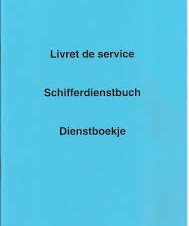
For professionals inland waterways, the Service Record Book (known in Dutch as a 'Dienstboekje') is an indispensable item. More than just a log, this personal, official document provides verifiable proof of your professional life on the water. It meticulously records all your time at sea, the licenses and certifications you have earned, and the specific voyages you have completed. This documentation is vital not only for establishing your current level of experience but also as a fundamental requirement for advancing your career in the sector. Below, we detail the book's contents, its significance, and the process for obtaining and maintaining it.
What Does the Service Book Contain?
This officially and internationally recognized document is a mandatory possession for all inland vessel crew members, with the exception of the captain/skipper. Its key sections include:
Personal and Medical Information: Essential data, including contact details and required medical fitness statements.
Professional Qualifications: Documentation of all relevant diplomas and special endorsements, such as the Rhine Navigation Patent, ADN (Dangerous Goods) Expert certification, or LNG Specialist qualifications.
Experience Log: A record of sailing days and specific ship voyages, used to demonstrate acquired experience.
Possession of the Service Book is frequently a prerequisite for obtaining further navigational permits or professional certificates.
Why is this Document so Important for Your Career?
The Service Book serves three primary functions:
Validating Sea/Sailing Time: The logged time is the official metric used to assign your rank/position and determine your eligibility for advanced courses or examinations. A minimum of 180 documented sailing days is required to qualify as a full sailing year.
Facilitating Promotion: If you aspire to take on senior roles like captain, helmsman, or marine engineer, the Service Book is the critical piece of evidence needed to prove your necessary experience.
Supporting Certifications and Licenses: It is mandatory for obtaining specialist endorsements (like LNG, ADN Expert, and the Rhine Patent). Furthermore, the log of voyages is necessary when applying to expand your operating permits to new geographical sailing zones.
How to Obtain Your Service Book
The application process is straightforward:
For Crew Members: New applicants should submit their request through the SAB (Stichting Afdrachtbeheer). The application must be supported by copies of your relevant diplomas and a valid medical certificate.
For Captains/Skippers: A distinct Service Book is available for skippers, which allows them to log their own sailing time for the purpose of acquiring supplemental certificates or permits.
Maintenance and Practical Use
Daily Record Keeping: While working, you must present your Service Book to the vessel's captain, who is responsible for accurately filling in the details of each voyage, including the ports of departure and arrival. This must be completed before the ship commences its next journey.
Annual Verification: The book requires mandatory inspection and stamping by a designated competent authority at least once per year. Remember to bring a copy of your separate sailing logbook when submitting the book for verification.
What to Do in Case of Loss or Completion
Book is Full? When the log is completely filled, apply for a replacement copy via the SAB, ensuring you submit the old, completed book with your application.
Document Loss: If the Service Book is lost or stolen, you must file a police report (proces-verbaal). This official document from the police is required to successfully apply for a new replacement copy.
In Summary
The Service Record Book is a mandatory regulatory instrument for every professional in inland navigation. It functions as the definitive record of your working history, certifications, and completed routes. Maintaining an up-to-date, correctly filled, and annually stamped book is crucial for securing and advancing your employment, certifications, and operational licenses within the inland waterway sector. Applications are processed through the SAB.